Bitcoin Turns 18: The 9-Page Idea That Grew Up
On October 31, 2008, an unknown author published a nine-page paper that changed money. Eighteen years later, Blockchain Bob explains how Bitcoin got from a mailing list to the global stage.
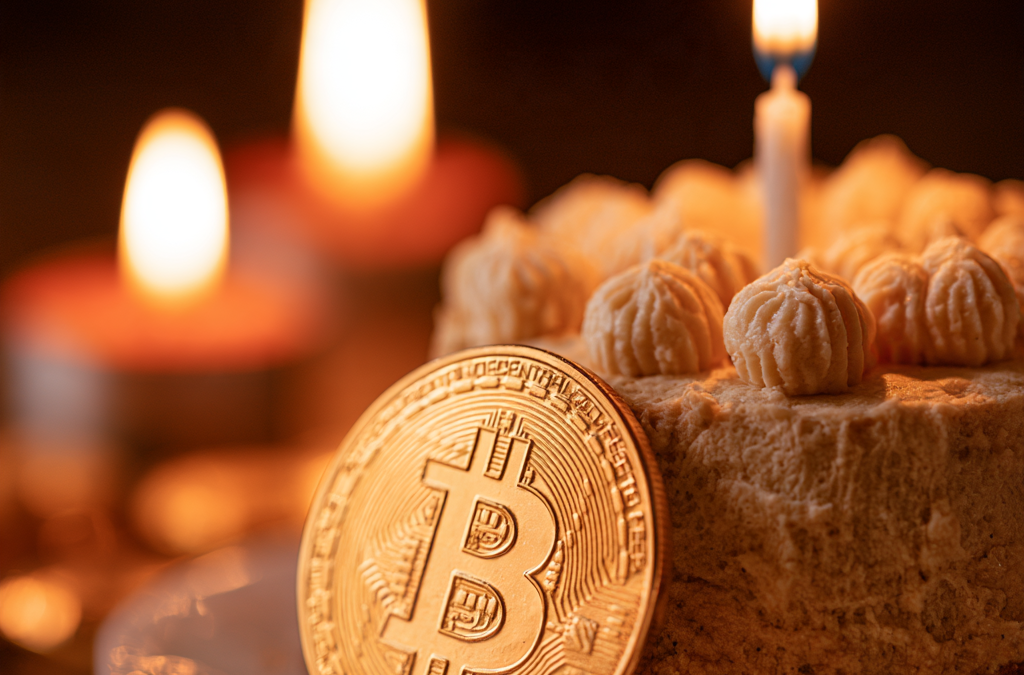
Hi, I’m Blockchain Bob, and today is Bitcoin’s 18th birthday.
Bitcoin is old enough to vote now, and it started with an email.
The Day It Began: October 31, 2008
On Halloween 2008, someone using the name Satoshi Nakamoto sent a short message to a cryptography mailing list. It linked to a nine-page paper titled “Bitcoin: A Peer-to-Peer Electronic Cash System.”
The world was in the middle of a financial crisis. Banks were failing, bailouts were in the headlines, and trust in the system was low. The paper proposed a different approach: digital money that works without a bank in the middle.
The Problem Bitcoin Solved
Digital files are easy to copy. If money is just a file, what stops someone from spending it twice? This is called the double-spend problem.
Before Bitcoin, the answer was always a trusted middleman, like a bank or a payment company, keeping the ledger and settling disputes.
Satoshi’s answer was a public ledger that everyone can check and nobody controls. That ledger is the blockchain.
How It Works, Bob-Style
Picture a notebook shared by thousands of people around the world.
- Transactions are announced. You say, “I’m sending Maya 1 coin.”
- Miners bundle them into a block. Computers around the world compete to add the next page to the notebook.
- Proof of work keeps it honest. Adding a page takes real computing effort. That makes cheating very expensive.
- Pages are chained together. Each block is linked to the one before it, so changing the past means redoing all the work after it.
- Everyone keeps a copy. If someone tries to cheat, the network rejects it.
That’s the whole idea: trust the math, not the middleman.
Bitcoin’s Birthday Timeline
- Oct 31, 2008: The whitepaper is published.
- Jan 3, 2009: The first block, the “genesis block,” is mined. Its hidden message refers to a newspaper headline about bank bailouts, which is widely read as a statement of purpose.
- Jan 12, 2009: The first Bitcoin transaction goes from Satoshi to developer Hal Finney.
- May 22, 2010: Programmer Laszlo Hanyecz pays 10,000 BTC for two pizzas. The community now celebrates it as Bitcoin Pizza Day.
- 2012, 2016, 2020, 2024: Each “halving” cuts the reward miners receive in half, which slows the creation of new coins.
- 2021: El Salvador becomes the first country to make Bitcoin legal tender.
- 2024: Spot Bitcoin ETFs launch in the U.S., opening Bitcoin to traditional investors.
Why Only 21 Million?
Bitcoin’s code caps the supply at 21 million coins, and roughly 95% have already been mined. The remaining coins will trickle out slowly over more than a century.
Fixed supply is a core part of Bitcoin’s design. Supporters call it “digital scarcity,” in contrast to currencies that governments can create in unlimited amounts.
The Mystery of Satoshi
Satoshi stopped posting in 2010 and handed the project to other developers. Nobody has verified who Satoshi is, and the coins from Bitcoin’s earliest days remain untouched. Bitcoin has run for 18 years without a leader, a headquarters, or a CEO.
What Bitcoin Teaches Us at 18
- Simple ideas can scale. Nine pages launched a global network.
- Open-source beats gatekeeping. Anyone can run the software and verify the rules.
- It’s still evolving. Debates over energy use, regulation, scaling, and its role as money are far from settled, and that’s healthy.
Whether you see Bitcoin as digital gold, a payment network, or an experiment, it has outlasted countless predictions that it would fail.
Bob’s Birthday Takeaway
Eighteen years ago, a stranger asked whether people could trust software more than institutions. We’re still working out the answer.
Happy birthday, Bitcoin. 🎂
Disclaimer: This article is for education only and is not financial advice. Crypto is volatile. Do your own research.